Choosing to study in the UK is a major life decision. You want a degree that offers more than just a certificate. You want a career.
The United Kingdom remains one of the premier study destinations globally. It sits alongside popular choices like study in Canada, study in the USA, and study in Australia.
However, the UK offers a unique blend of heritage and modern innovation.
In 2026, the job market is changing. International students must choose subjects that align with skill shortages and high career outcomes. This guide will help you navigate the UK universities landscape. It will ensure you make a choice that secures your future.
How to Decide What Degree to Study in the United Kingdom?
Choosing the right course requires a mix of self-reflection and market research. Do not just follow the crowd.
First, define your career goals. Do you want to be a software engineer at a tech giant? Or maybe a financial analyst in the City of London? Your goal dictates your path.
Second, look at UK education rankings. Use the QS world university rankings to find top universities. Names like the University of Oxford, University of Cambridge, and Imperial College London are world leaders. But do not ignore specialists.
The London School of Economics is elite for economics accounting. The University of Manchester is a powerhouse for engineering course options.
Third, check the entry requirements. Every course in the UK has specific grades and English needs. You may need test preparation for the IELTS or PTE.
Finally, consider the location. A London School offers proximity to global firms. However, the University of Edinburgh or University of Warwick offer different cultural experiences and lower living costs.
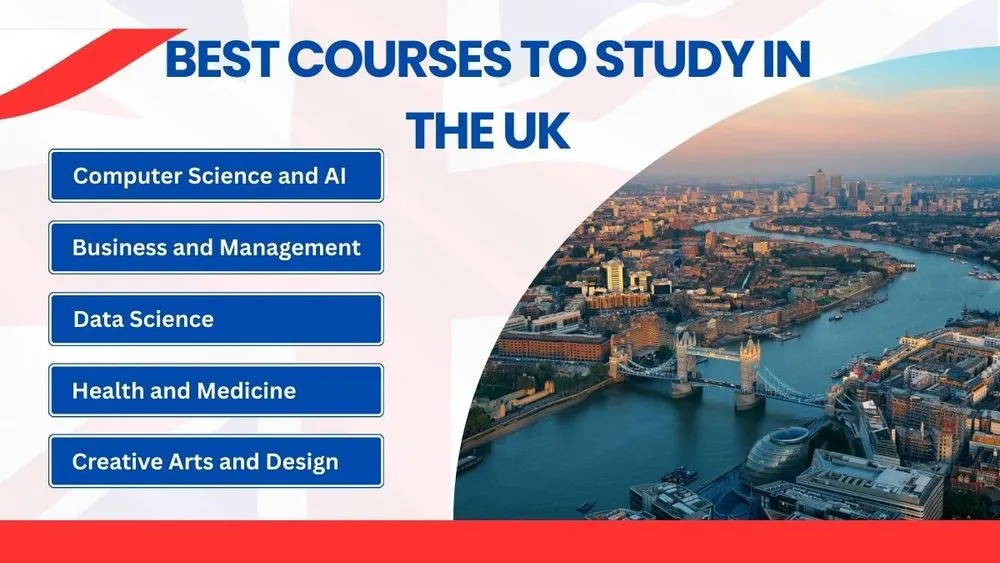
Top 10 Courses to Study in the UK for International Students
Selecting a path defines your lifestyle. These top courses combine high salaries with massive global demand for graduates.
1. Computer Science and AI
Computer science is the backbone of the modern economy. UK degrees focus on artificial intelligence, machine learning, and cyber security. A software development degree from a top college in London or Manchester will open doors globally.
Course Fees: Annual tuition for computer science ranges from £20,000 to £40,000 per year. Prestigious labs and high-tech facilities drive these costs. Prices are lower at regional universities outside of London.
How to Apply: Submit your application through UCAS for undergraduate roles. Use the university portal for a best msc course to study in the United Kingdom. You need a strong math background and a high IELTS score.
2. Business and Management
Business studies remains a popular course. Many students pursue management studies or an MBA. If you like numbers, look into business analytics or accounting and finance. The London School of Economics is a top choice here.
Course Fees: Expect to pay between £20,000 and £43,000 per year. Elite MBA programs can cost more. These fees cover global networking events and industrial placements within the UK.
How to Apply: Focus on your personal statement. Highlight your leadership potential. Most business and management programs require a solid academic record and proof of English proficiency.
3. Data Science
The demand for a data scientist is at an all-time high. A data science degree teaches you to turn raw information into profit. This is a top msc course to study in the UK for those with a background in math or IT.
Course Fees: Fees usually sit between £11,800 to £46,700 annually. This investment covers advanced computing resources and data labs. Some universities offer scholarships for tech talent.
How to Apply: Apply directly on the university website for a Master's. You generally need a degree in a quantitative subject. Prepare a portfolio of any data projects you have completed.
4. Health and Medicine
The UK has a massive shortage occupation list in healthcare. Nursing course options and biomedical science are vital. If you prefer mental health, becoming a clinical psychologist is a stable and rewarding path.
Course Fees: Clinical degrees are expensive. Fees range from £19,400 – £33,600 per year. Biomedical science and nursing are usually on the lower end of this scale.
How to Apply: Medicine requires the UCAT or BMAT exam. For nursing and psychology, apply via UCAS. You must pass a background check and a health screening for clinical placements.
5. Engineering
Whether you want to be a civil engineer, mechanical engineer, or electrical specialist, the UK is the place. Civil mechanical electrical roles are always in demand. Engineer civil roles are particularly important for new infrastructure projects.
Course Fees: Tuition typically ranges from £20,000 to £30,000 per year. This covers lab work and practical workshops. Many courses include a year in industry for extra pay.
How to Apply: Use UCAS for bachelors and university portals for masters. Focus on your physics and math grades. Demonstrate your problem solving skills in your application letter.
6. Law
UK law degrees are famous worldwide. Many countries base their legal systems on English Law. This makes international study in law very valuable.
Course Fees: Law programs cost between £11,500 and £40,000 per year. Higher costs apply to specialized LLM programs in London. The prestige of the degree justifies the investment.
How to Apply: Most universities require the LNAT exam. Apply early through UCAS. Ensure your English writing skills are excellent. Law is a reading intensive subject.
7. Creative Arts and Design
If you are creative, consider becoming an interior designer, fashion designer, or graphic designer. Creative arts programs in London provide direct links to the global fashion and art industry.
Course Fees: Fees vary from £15,000 to £30,000 per year. You must also budget for materials and studio costs. London schools are often more expensive due to industry links.
How to Apply: Your portfolio is the most important part. Submit your best work digitally or by mail. Many tutors look for unique style and creative thinking over perfect grades.
8. Construction Management
The UK needs construction managers and experts in construction project management. This is a skilled professional route with excellent pay.
Course Fees: Annual tuition is generally between £16,000 and £24,000. This is a cost effective path compared to medical or high tech degrees. The return on investment is high.
How to Apply: Apply through UCAS or the direct university portal. A background in business or engineering is helpful. Highlight any relevant work experience in the building sector.
9. Psychology
Is psychology a good course? Yes. With a rising focus on mental health, the need for counselors and researchers is growing. It is a versatile social sciences degree.
Course Fees: Expect to pay £16,000 to £26,000 per year. If the course is BPS accredited, it may be on the higher end. This accreditation is vital for your future career.
How to Apply: Apply via UCAS. Focus on your interest in human behavior. Science and math grades are often used to assess your suitability for the research modules.
10. Education and Social Sciences
International applicants often overlook these. However, they provide excellent career paths in policy, teaching, and NGO work.
Course Fees: These are often the most affordable courses. Fees range from £14,000 to £22,000. They offer great value for those entering the public sector or non profits.
How to Apply: Submit your application through UCAS. Express your passion for social change or teaching. Relevant volunteer work will make your application stand out from others.
Which Course is Best for the Future in the UK?
The future belongs to technology and sustainability.
The Rise of Artificial Intelligence
AI is changing every industry. Learning to build and manage these systems ensures you remain employable. It is the most secure path for the next decade of work.
These degrees offer more than coding skills. They teach ethics and problem solving. You will be at the forefront of the next industrial revolution in the UK.
Business and Data Analytics
Data is the new oil. Companies need experts to read and interpret it. This makes business analytics a top choice for a high paying career.
You will learn to bridge the gap between tech and management. This role is vital for corporate strategy. Most graduates find work within weeks of finishing their degree.
Healthcare and Skilled Professions
Roles on the shortage occupation list offer the best security. The UK has a long term need for nurses and medical staff. This demand will not fade.
These paths lead to a stable student visa transition. You can move into a skilled worker role quickly. It is a guaranteed way to build a life in Britain.
Choosing a course from these categories removes any risk. You are picking a field that the world actively needs. This ensures your skills remain in high demand everywhere.
Why These Courses Are Best for International Students?
These courses offer the best career outcomes. When you choose the UK, you are investing a lot of money. You need a return on that investment.
A UK degree is a global currency. Whether you work in London, New York, or Dubai, employers respect UK universities. This reputation helps you bypass entry-level hurdles in many countries. You gain a competitive edge that lasts your entire professional life.
The networking opportunities are unmatched. Studying in a hub like London connects you with international firms. You are not just learning from books. You are meeting the people who lead your industry. This exposure often leads to internships and job offers before you even graduate.
Finally, the UK Graduate Route is a massive benefit. It allows you to gain two years of work experience after your studies. This experience is what transforms a student into a skilled professional. It makes your CV stand out to employers across the whole world.
Conclusion
Studying in the UK in 2026 is a brilliant move for your future. You now have a clear list of the best courses and their costs. Use this data to pick a path that matches your skills.
Focus on fields with high demand like AI, healthcare, or data science. These subjects offer the best job security and salary potential. Your choice today will define your career for the next twenty years.
Take the first step and start your application today. The UK is waiting for talented students like you. With the right course, you will build a successful and globally recognized career.
FAQs
How much will it cost to study in the UK?
Tuition fees range from £10,000 to £60,000 per year. International students also need to budget for health insurance (IHS) and living costs. London is more expensive than northern cities.
How to get a 100% scholarship in the UK?
Full scholarships like Chevening or Commonwealth are highly competitive. You need excellent grades and a strong leadership profile. Most United Kingdom universities offer partial bursaries.
Can I get UK PR in 2 years?
No. Usually, you need to be on a skilled worker visa for 5 years to apply for Indefinite Leave to Remain (PR). The 2-year Graduate Visa does not count directly toward the 5-year PR clock, but it helps you find a sponsor.
What is the highest paid degree in the UK?
Degrees in Medicine, Business Analytics, Data Science, and Law typically lead to the highest starting salaries. A project manager in construction also earns a high wage.
Do I need IELTS to study in the UK?
Most UK universities require IELTS. However, some accept high school English scores or alternative tests like TOEFL or PTE. Check with education consultants for specific university policies.
What is the easiest course to study in the UK?
There is no "easy" course. However, humanities or social sciences might have fewer technical exams than computer science or medicine. Choose based on your interest, not perceived difficulty.